
Does Your Board Have a Defined Technology Risk Appetite? Most Don't
Does your board have a technology risk appetite? Learn how clear limits on cyber, AI, vendors, and downtime help you govern with more confidence.


Most boards do not have a clear technology risk appetite statement. They approve budgets and hear updates, but they lack a simple guide on how much tech risk their company can take before it hurts goals.
A technology risk appetite is a board-approved boundary. It states the maximum disruption from cyber threats, AI use, vendor failures, or tech changes you will accept. Think downtime limits, data loss caps, or vendor outage tolerances. Without it, you react to problems. You miss safe growth paths. Revenue dips, trust erodes, and regulators question oversight.
You may assume that management sets this. They don't. Boards own it because tech risks now tie straight to business outcomes. Growth strains systems. AI speeds ahead of controls. Vendors hold too much power. Recent breaches show boards without appetite scramble, approve late fixes, and face higher costs.
This post shows why you need one now. You will learn what it means, common gaps, success examples, and questions for your next meeting. Start here to make sharper choices.
Why a Technology Risk Appetite Matters to Your Leadership Decisions Now
Tech risks press you harder each quarter. AI tools roll out fast. Cyber attacks hit operations. Vendor outages stop revenue. Boards face more accountability from regulators and investors. Without appetite, your oversight stays weak.
Fuzzy views lead to trouble. You stall innovation because every change feels risky. Or you rush ahead and face surprises. Crises force panic spending. One outage can cost millions in lost sales and fixes.
Consider recent cases. Companies without clear limits suffered long downtimes. Boards approved rushed budgets after the fact. Stronger boards set boundaries first. They balance speed and safety.
You need this for governance. It builds resilience. Decisions align with strategy. Trust grows when you explain risks plainly. Management executes better with clear lines.
Weak appetite creates chaos. Strong appetite gives control. Here's a quick view:
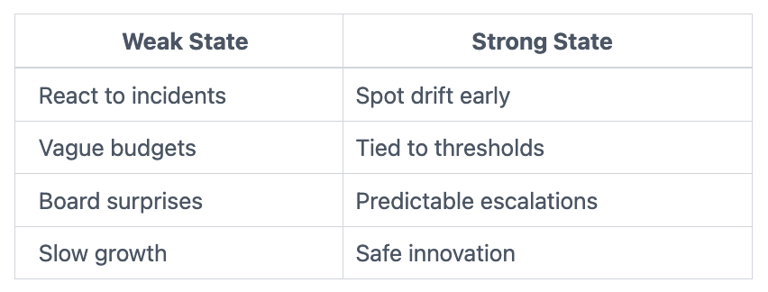
As a result, you lead with confidence. Oversight matches real stakes.
What a Technology Risk Appetite Really Means for Your Board
Your technology risk appetite is a short board statement. It sets tolerances for cyber, data, AI, and operations risks. Unlike vague policies, it uses numbers like hours of downtime or dollar losses.
You align it to strategy. Set measurable limits. Review it yearly. Benefits include better choices and clear delegation to management.
For details on how boards set technology risk appetite, see this guide.
The Main Components You Need to Include
Build it with these elements:
Risk categories: Cyber attacks, AI errors, vendor failures, change mishaps.
Tolerance levels: Four hours max downtime for revenue systems; $100,000 fraud loss per quarter.
Escalation triggers: Breaches over limits go to CEO; repeats hit the board.
Strategy links: Ties to growth targets or compliance needs.
Examples fit your firm. A retailer caps checkout outages at two hours. A manufacturer limits supplier risks to avoid production halts. These keep focus sharp.
How It Differs from General Risk Management
General management covers all risks broadly. Yours is tech-specific and proactive. You set board-level lines for cyber and AI. Management reacts to compliance.
This empowers you. Challenge reports with "Does this stay in appetite?" You delegate execution but own thresholds.
Why Most Boards Still Don't Have One
You skip it because you think it's management's job. Tech-savvy directors are rare. Cyber noise overwhelms. Finance risks get more airtime.
NACD surveys show low adoption. Signs include uneven tech budgets or incident panics. You might miss it if reports stay siloed.
Top Blind Spots Keeping Your Board in the Dark
Common issues hurt visibility:
Siloed updates hide full risks.
No metrics track drift from limits.
Blind trust in vendors ignores outages.
AI rushes bypass reviews.
Each raises business costs. Fix them with clear thresholds.
What Good Technology Risk Appetite Looks Like in Action
You approve it yearly. Management reports progress. Choices align, like AI pilots with data caps.
Before, decisions react. After, they follow lines. Fewer shocks speed growth.
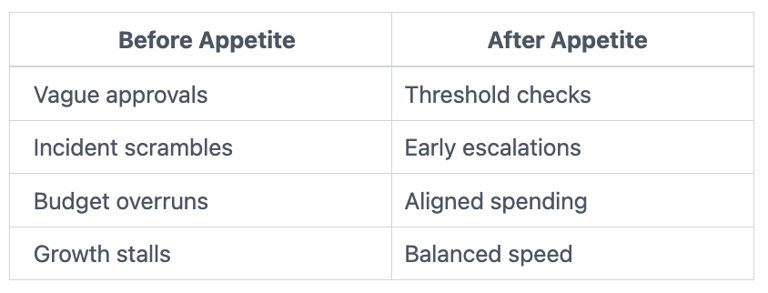
You gain confidence to push forward.
Real Examples from Boards That Got It Right
A mid-size firm capped vendor risks at 10% exposure. They dodged breach costs. A growth company set AI data loss at zero for customers. Speed stayed high with safeguards. You win similar outcomes.
Questions Your Board Should Ask Today
Use these in your next session:
What tech risks fit our growth targets?
How do we measure appetite breaches?
Who approves exceptions, with limits?
Are vendors inside our tolerances?
What changed since last review?
Does AI use stay within lines?
When does this escalate to us?
Each tests readiness. Ask for evidence.
Key Takeaways for Your Board on Technology Risk Appetite
Most boards lack one; define yours clearly.
Tie to business outcomes like revenue and trust.
Use thresholds for cyber, AI, vendors.
Review quarterly; adjust for changes.
Ask sharp questions now.
You start with a workshop on crown jewels.
Frequently Asked Questions About Board Technology Risk Appetite
How often do you review it? Yearly, or after big shifts like M&A. Triggers like incidents prompt checks.
Who owns it? You do. Management executes and reports.
How does it link to cyber governance? It sets cyber lines within tech risks. See board cyber risk advisor services.
Can you start small? Yes. Pick three risks first, like downtime and vendors.
What if management pushes back? Discuss tradeoffs. Document choices.
You Control Tech Risks with Clear Lines
Schedule a discussion now. Use two questions from above. Review current risks. Draft a one-page statement.
This brings clearer calls and stronger resilience. You face AI and cyber with defined bounds. Growth accelerates without dumb risks. Act this quarter.
Tyson Martin is the executive public and pre-IPO companies in financial services, AI/data, SaaS, and cloud hire to make trust a measurable asset, one accountable answer to Is it secure? Is it resilient? Is the AI governed?
© 2026. All rights reserved.
Navigation
Free Resources
Contact


Stay ahead of your next board agenda
Sign up for Reports & Learnings From the Boardroom. Plain-English AI and cyber governance insights, biweekly. No pitch.
No spam. Unsubscribe anytime. · Or download the Director's AI Question Pack — 25 questions free