
The Invisible Cost of Vague Risk: How uncertainty kills mid-market M&A deals.
The Invisible Cost of Vague Risk can cut your mid-market deal by 15 to 30%. See how clear cyber reporting protects value and buyer trust.


You prepare your mid-market company for sale. Growth looks solid. Revenue climbs steadily. Then buyers probe your cyber and technology risks. Vague answers emerge. Reporting lacks trends. Ownership blurs. Buyers see uncertainty as a hidden bomb. They cut valuations by 15 to 30 percent. Some walk away entirely. Deals die quietly.
This is the invisible cost of vague risk. Buyers demand proof because post-deal surprises hit their balance sheets. Fuzzy cyber posture signals deeper issues like weak controls or unvetted vendors. You lose trust fast. Growth stalls. Board scrutiny rises.
The fix is simple. You build clear, board-level visibility into risks. Thresholds define appetite. Metrics show trends. Ownership sticks. Deals close at full value because buyers see control, not chaos. You turn vague threats into valued assets.
Key Takeaways
The invisible cost of vague risk hits mid-market M&A hardest through valuation haircuts and walkaways.
Buyers probe cyber gaps deeper because diligence budgets stay thin.
Inconsistent reporting often costs more than admitted breaches.
Clear vendor maps and board ownership build buyer confidence.
Upgrade to decision-ready reports now to protect deal timelines.
Why Vague Risk Dooms Mid-Market M&A Deals
You lead a mid-market firm eyeing M&A. Buyers move quick. They lack big-firm budgets for endless audits. So they zero in on cyber and tech risks. Vague answers trigger alarms. PwC's 2025 M&A report notes 25 percent of mid-market deals face 20 percent valuation cuts from unclear cyber posture. Deloitte echoes this. Uncertainty equals liability.
Buyers assume the worst. Fuzzy metrics hide breaches waiting to surface. Unclear vendor ties suggest supply chain bombs. No board oversight means risks run wild post-close. You face stalled timelines. Lost growth. Board questions pile up as incidents rise amid AI tools and ransomware waves.
Mid-market firms hurt most. You grow fast. Tech stacks multiply. Oversight lags. Buyers spot this in diligence. They demand fixes or discounts. Sometimes they bolt.
Consider this comparison. Vague risk drags deals down. Clear posture speeds them up.
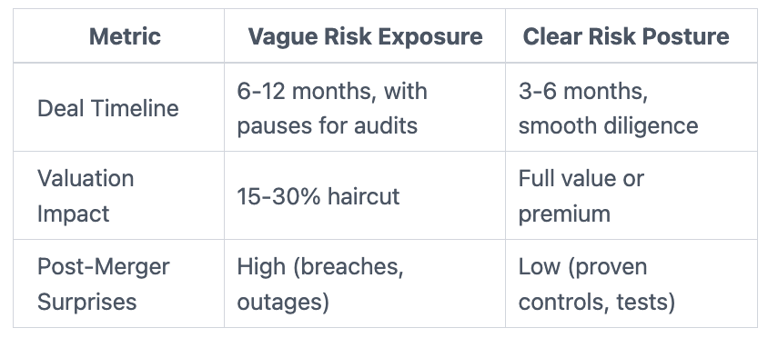
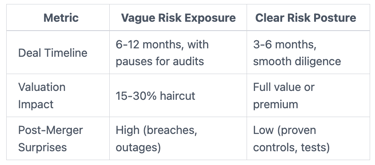
Clear visibility wins. You avoid the invisible cost of vague risk. Buyers pay more when they trust your governance. Act now. Growth demands it.
Spotting the Signs of Vague Risk Before Buyers Do
You run self-assessments quarterly. Buyers will too, but faster. Spot vague risk early. Fix it before diligence. Common blind spots include patchy reporting, vendor blind spots, and weak ownership. You think IT covers it. Buyers find gaps in hours.
Address these now. Self-checks reveal what diligence will expose.
Inconsistent Cybersecurity Reporting
Patchy metrics mask true exposure. You get dashboards full of counts. No trends. No thresholds. Buyers demand fixes. Deals slip.
A manufacturing firm lost 20 percent value last year. Unclear breach response times hid weak containment. Buyers saw panic potential.
Quick checks for you:
Do reports show trends over six months?
Are thresholds tied to business impact like downtime?
Can management explain exceptions with owners?
Run these. Buyers test them first.
Unclear Vendor and Tech Dependencies
You rely on outsiders for cloud, payroll, CRM. No maps. No assurance checks. Blind spots kill trust. Supply chain hits become your crisis.
One retailer faced this. A vendor outage stopped sales. No backups. Buyers walked after spotting contract gaps.
Red flags to scan:
No tiered vendor list with critical flags.
Missing incident notice clauses.
Unmapped data flows to third parties.
Growth speeds vendor adds. Map them. Cut dumb risks.
Missing Board-Level Risk Ownership
Blurry accountability lets risks grow unseen. IT reports to CIO. No exec ties. Board lacks thresholds. Vague becomes default.
Contrast weak and strong. Weak: Shared ownership, no escalations. Strong: Named execs per risk, clear paths to board.
You see gaps when questions like "Who accepts this exposure?" go unanswered. Buyers grill this. Your board must own it first.
Clearing the Fog: Steps to Protect Your Deal Value
You protect value with targeted steps. Focus on reporting upgrades and board questions. Numbered actions build momentum. Start with audits. Define appetite. Test readiness.
Audit current reports for trends and owners.
Map vendors and tech stacks to crown jewels.
Set thresholds like max downtime or data loss.
Run tabletop drills on M&A scenarios.
Document decisions in a one-page register.
These uncover the invisible cost of vague risk. You gain confidence. Buyers see it too. For board-level framing, check how boards set technology risk appetite.
Upgrade Your Risk Reporting for Buyers
Shift to decision-useful formats. Ditch raw counts. Show trends, thresholds, ownership.
Sample dashboard elements:
Downtime trends for key systems (hours per quarter).
Vendor assurance coverage (percent critical with audits).
Incident contain times (average vs target).
Open exceptions (with expiry dates).
Buyers love this. It proves control.
Questions Boards Must Ask Management Today
Use these five in your next meeting. Each reveals vague spots.
What cyber risks could unwind this deal, and who owns them? (Tests ownership.)
Show trends on crown jewel protections over six months. (Proves progress.)
Which vendors hold our data, and what's the exit plan? (Maps dependencies.)
What thresholds define "material" for us? (Sets appetite.)
Walk us through a breach response with timelines. (Builds readiness.)
Answers expose gaps. Demand evidence. For more prompts, see board reporting for cybersecurity program.
FAQs on Vague Risk in Mid-Market M&A
How Much Value Does Vague Risk Strip from Deals?
Expect 15-30 percent cuts, per PwC data. Prevention pays. Clear reports hold full value.
What's One Quick Win for Risk Clarity?
Standardize metrics on trends and thresholds. Share a one-page dashboard monthly.
How Do Buyers Spot Vague Risk?
They probe reporting consistency, vendor maps, and ownership in diligence. Fuzzy answers trigger discounts.
When Should Boards Step In on M&A Risk?
Now, if growth strains oversight or deals loom. Triggers include vendor growth or recent incidents. For guidance, explore board cyber risk advisor.
Vague risk carries an invisible cost. It kills mid-market M&A through distrust and discounts. You fix it with clear visibility. Trends over trivia. Ownership without blur. Thresholds that stick.
Recap the stakes. Buyers demand proof amid rising threats. You deliver board-owned reports and tested plans.
Your next moves this quarter:
Audit reports for buyer readiness.
Ask the five questions above.
Map top vendors with exit paths.
These build momentum. You close deals stronger. Decisions stay confident.
Tyson Martin is the executive public and pre-IPO companies in financial services, AI/data, SaaS, and cloud hire to make trust a measurable asset, one accountable answer to Is it secure? Is it resilient? Is the AI governed?
© 2026. All rights reserved.
Navigation
Free Resources
Contact


Stay ahead of your next board agenda
Sign up for Reports & Learnings From the Boardroom. Plain-English AI and cyber governance insights, biweekly. No pitch.
No spam. Unsubscribe anytime. · Or download the Director's AI Question Pack — 25 questions free