
A Clear Framework for Board Cyber Risk Oversight
Use this four-pillar cyber risk oversight framework to set risk appetite, sharpen board reporting, target vendor and AI risk, and test response plans.


You face cyber threats that hit revenue, trust, and growth overnight. Breaches cost 10 to 20% in stock value on average. Regulators name directors in filings. AI adds unknowns. Vendor failures spark 80% of incidents. You need oversight that guides decisions, not tech details.
This four-pillar framework gives you control. You set risk appetite first. Then build visibility through reports. Next focus on high-impact spots. Finally test response plans. It keeps you out of weeds. You align strategy with reality. Surprises drop. Growth stays defensible.
Busy boards use this to cut noise. You own outcomes, not alerts. Start here for fewer legal hits and stalled deals.
Key Takeaways for Busy Leaders
You define risk appetite first to guide vendor choices and AI pilots without chasing every alert.
You demand board reports with trends and gaps, not raw data dumps, for faster calls.
You target vendors and AI as top risks since they drive most breaches.
You test incident plans quarterly to spot gaps before regulators ask.
You link oversight to business stakes like revenue loss and downtime.
You avoid jargon traps; focus on ownership and proof.
You act now: pick one pillar for your next meeting.
Why Cyber Risk Oversight Has Become Your Board's Top Priority
Cyber incidents erase trust fast. You see 10 to 20% stock drops after breaches. Customers leave. Deals stall in diligence. Regulators scrutinize boards directly. AI tools multiply risks without clear rules. Growth strains old controls. Vendors hold keys to your data.
Casual oversight fails here. You get volumes of alerts but no priorities. Management silos hide gaps. Boards react late. Consider a retailer hit by vendor ransomware. Orders stopped for days. Revenue vanished. The board lacked thresholds. They approved fixes post-loss.
Strong oversight changes that. You set boundaries upfront. Reports show trends. Decisions tie to strategy.
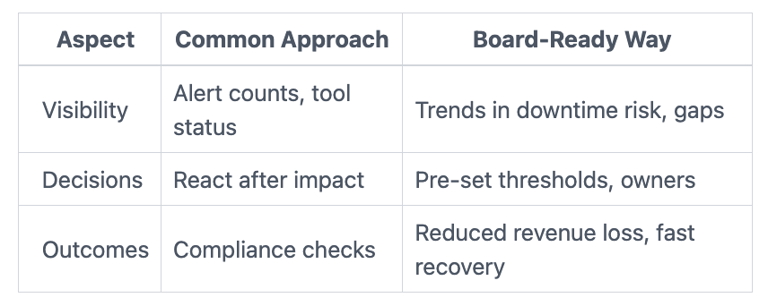
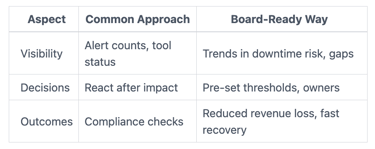
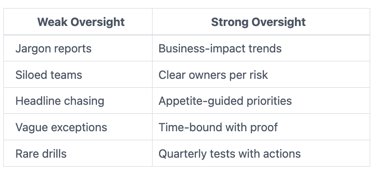
This table shows the shift. You spot your gaps. Oversight builds resilience. Pressure from incidents or M&A demands it now.
Your Four-Pillar Framework for Confident Cyber Risk Oversight
You stay in control with this simple framework. It skips tech specs. You focus on judgment calls that protect growth. The pillars are: set risk appetite, demand clear reports, target hot spots, test responses.
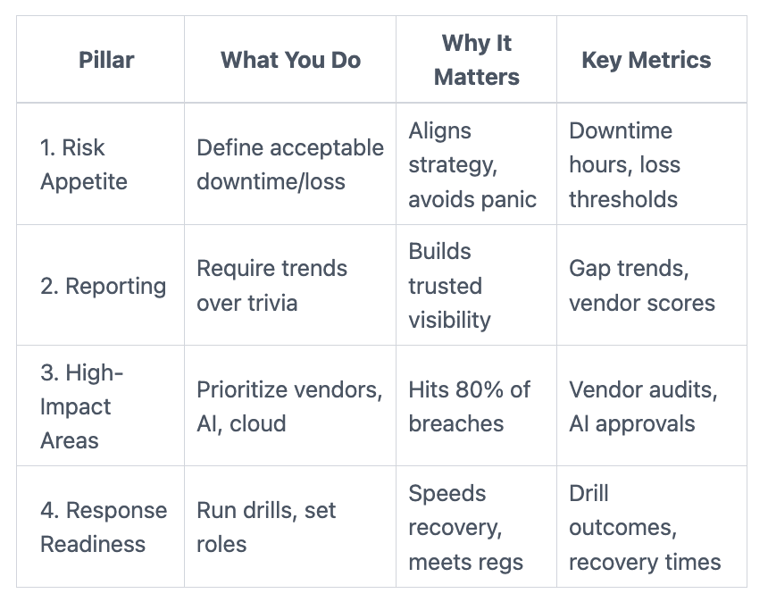
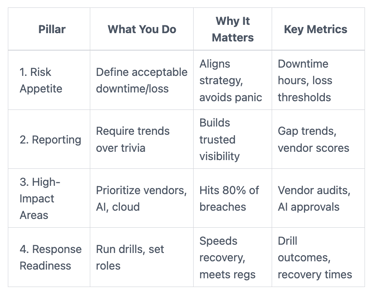
You start with appetite to frame everything. Then layer in visibility. This keeps surprises low. Boards gain confidence for deals and audits.
Pillar 1: Set Clear Boundaries on Cyber Risks You Will Accept
You define what downtime or data loss hurts revenue most. Link it to strategy. Workshop scenarios like a 24-hour outage. Get exec buy-in.
Ask these: How many hours can billing stop? What data loss triggers regulators? Does AI pilot fit growth goals?
Common error: no appetite means overreaction to alerts. You chase trivia. Clear boundaries guide vendor picks and budgets. Tie to overall risk. For details on how boards set technology risk appetite, see this guide.
Pillar 2: Demand Reporting That Lights Up Real Risks
You get 5 to 10 KPIs: threat trends, control gaps, vendor risks. Use visuals in packs. Focus exceptions and forward views.
Rhythms work: monthly dashboards, quarterly dives. Spot bad reports by volume without insight. Fix with trends. This strengthens calls during growth.
Link to board reporting for cybersecurity programs for examples that drive action.
Pillar 3: Zero In on Vendors, AI, and Other Hot Spots
You oversee where breaches start: vendors (80% cases), AI threats, cloud shifts. Approve key vendors. Set audit thresholds.
Examples: quiet vendor gaps build to outages. Delegate but escalate. Stay practical. Avoid overreach.
Pillar 4: Test Response Plans Before Crisis Hits
You check prep with table-tops. Define roles, recovery goals. Drills reveal gaps quick. Tie to appetite.
Board views post-reviews. Builds resilience for regulators. For board incident response oversight, review proven steps.
Pitfalls That Trip Up Even Experienced Boards
You fall into jargon updates that confuse. Silos block views. Headlines pull from strategy. No thresholds mean vague acceptance.
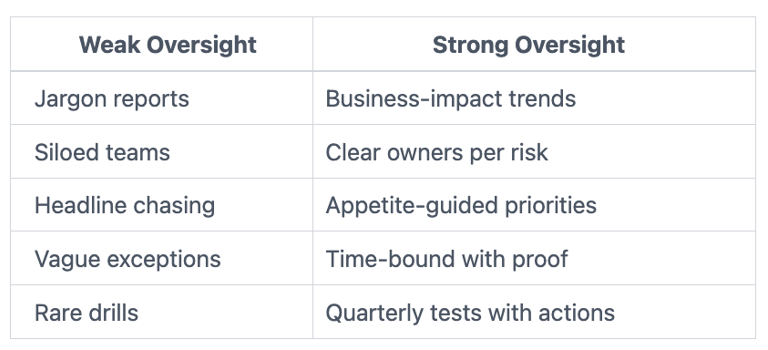
Fixes tie to pillars. You demand plain language. Assign owners. This nods to your experience. Boards stay ahead.
Questions to Ask and Strengthen Your Cyber Risk Oversight Now
Group by pillar. Use in meetings.
Pillar 1: Does appetite cover AI vendors? What downtime hits revenue?
Pillar 2: What threats changed last quarter? Show top gaps.
Pillar 3: Which vendor outage stops us 24 hours? AI approval process?
Pillar 4: Last drill gaps fixed? Recovery matches appetite?
These trigger decisions. Cut noise. Act next call. For more, check cyber risk questions audit committees should ask.
Frequently Asked Questions About Board Cyber Risk Oversight
How often do you review cyber reports? Monthly dashboards, quarterly deep dives. Ties to changes.
Management's role vs. board's? They execute. You set appetite, oversee trends. Delegate with escalations.
Handle AI in oversight? Set thresholds in appetite. Review pilots quarterly. Link to vendors.
Post-incident steps? Review against pillars. Update plans. Document lessons. Builds proof.
You Lead Cyber Risk Oversight That Protects Your Legacy
This framework hands you control. Clarity cuts surprises. Growth stays defensible. You set appetite. Visibility guides. Focus hits risks. Tests build readiness.
Pick one pillar. Schedule a 30-minute exec huddle this week. Ask your top question. Momentum starts. Oversight works when you lead it.
Tyson Martin is the executive public and pre-IPO companies in financial services, AI/data, SaaS, and cloud hire to make trust a measurable asset, one accountable answer to Is it secure? Is it resilient? Is the AI governed?
© 2026. All rights reserved.
Navigation
Free Resources
Contact
Stay ahead of your next board agenda
Sign up for Reports & Learnings From the Boardroom. Plain-English AI and cyber governance insights, biweekly. No pitch.
No spam. Unsubscribe anytime. · Or download the Director's AI Question Pack — 25 questions free