
Cyber Risk Oversight: The Questions That Reveal Whether Your Governance Works
Test your cyber risk oversight with 12 board-ready questions that expose weak reporting, blurry ownership, vendor risk, and response gaps.


You know cyber threats keep you up at night. Effective cyber risk oversight boils down to asking pointed questions. These cut through reports and jargon. They show if your governance has real strength.
Too many companies have policies in place. Yet they lack clear visibility into cyber risks. Those risks threaten growth and resilience. Poor oversight leads to surprises. It erodes trust. Regulators apply heat. Decisions stall.
Use these targeted questions to test your setup. They reveal if governance drives decisions or just fills binders.
Key Takeaways for Your Next Board Meeting
Ask about risk appetite alignment first to match cyber posture with business goals.
Test reporting for decision usefulness; trends beat data dumps.
Probe third-party controls to spot hidden exposures.
Check incident response ownership to avoid chaos in crises.
Measure resilience through simulations and recovery tests.
Ensure board education keeps pace with business changes.
Track one key metric that shows real progress on top risks.
Why Your Cyber Risk Oversight Might Be Failing Silently
You lead a growing company. Cyber risks grow with it. Yet common failures hide in plain sight. Weak reporting buries risks in metrics. Vendor reliance masks exposures. Ownership blurs as you scale. These create reactive postures. They miss proactive tests.
Consider a vendor breach. It goes unnoticed. No one owns monitoring. Compliance feels busy. Real oversight stays absent. Business impacts follow: growth stalls, board tension rises, incidents cost more.
Without fixes, you face avoidable hits. Spot these cracks now. Strong oversight builds confidence for bold moves.
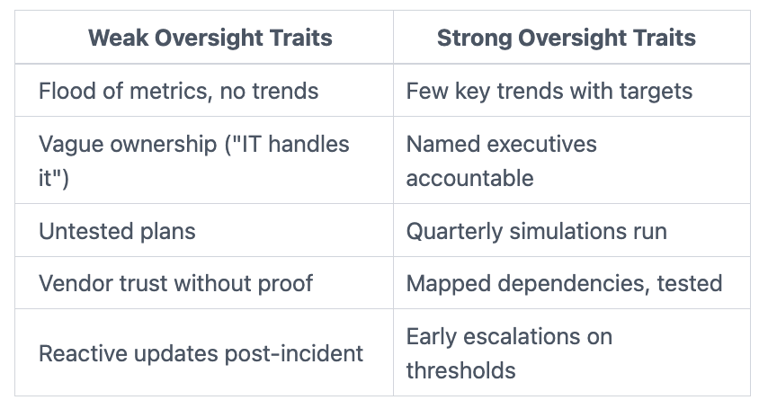
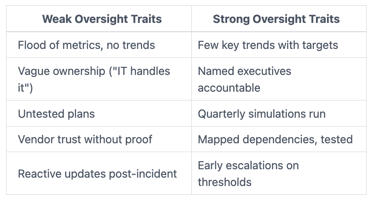
This table shows the gap. Weak traits lead to surprises. Strong ones enable steady decisions. Start by scanning your last report.
Reporting That Hides More Than It Reveals
Generic dashboards fail you. They focus on trivia over trends. You get patch counts. Not risk changes.
Decision-useful reporting shows clear posture. It flags escalations. Key changes stand out.
Ask these now: What one trend shows exposure dropping? Which metric ties to revenue risk? How do we know reporting matches reality? These pull truth from noise.
For board-ready examples, see how CISOs translate cyber risk into business impact.
Vendor Dependence Creating Hidden Blind Spots
Third parties raise risks quietly. One weak link sinks resilience. Business hits follow: outages, data leaks.
You need vendor risk mapping. Controls must match your stakes.
Ask: Which vendors hold crown jewels? What contract terms force fast notice? How do we test fallback plans? These expose gaps before breaches.
Ownership Gaps That Grow with Your Company
Scaling blurs roles. Cyber issues spark finger-pointing in crises.
Clear roles prevent that. Define who decides. Set escalation paths.
You gain calm execution. No more "who owns this?"
The 12 Questions That Test Your Cyber Risk Governance
These 12 questions form the core test. Grouped by focus, they suit boards and CEOs. Non-technical, they probe oversight strength. Start with the top three this quarter. They reveal if governance works or just appears solid.
Phrase them confidently. Demand evidence. Benefits follow: fewer surprises, sharper decisions, trust that holds.
Questions for Visibility and Risk Alignment
Visibility starts governance. Without it, you chase shadows.
How does our cyber risk profile align with business appetite today?
What changed in top risks since last quarter, and why?
Which one number shows if we're inside risk bounds?
How do crown jewels map to potential downtime or loss?
These tie risks to outcomes. Decisions strengthen. For appetite guidance, check how boards set technology risk appetite.
Questions for Decision Rights and Escalation
Chaos brews without clear rights. Escalation must trigger on impact.
Who has final say on high-risk changes, and how is it documented?
When does a risk move from management to board?
What proves we followed escalation last time?
Ownership prevents panic. Paths stay predictable.
Questions for Resilience and Third-Party Controls
Resilience tests plans. Vendors demand scrutiny.
When did we last simulate a major breach, and what broke?
How do recovery tests match business needs?
Which vendor gaps could halt operations, and what's the backup?
Do contracts enforce notice and access for incidents?
These build trust. Simulations expose weaknesses. See board incident response oversight for drills.
What Strong Cyber Risk Oversight Looks Like in Action
Strong oversight creates rhythms. Steady reports arrive quarterly. Trends guide, not overwhelm.
Tested playbooks exist. Simulations reveal gaps. Ownership charts clarify roles.
Incentives align. Board briefings inform fast. No data floods.
You see confidence grow. Growth accelerates. Surprises drop.
Contrast weak states: ad-hoc updates, unowned risks, ignored vendors. Strong setups deliver resilience. For advisor support, explore board cybersecurity advisor essentials.
Frequently Asked Questions About Cyber Risk Oversight
How often should boards review cyber risks? Quarterly deep dives work best. Tie them to business shifts. Monthly signals catch drift early.
What if management resists these questions? Frame as shared wins. Evidence builds cases. Insist on timelines for answers.
How do you start without deep experts? Pick three questions. Use them in your next meeting. Track changes over time.
Does strong oversight need new tools? No. Focus on decisions first. Tools follow priorities.
How does this tie to regulations? Questions align with SEC rules. They ensure defensible records.
You Hold the Tools for Confident Leadership
Strong cyber risk oversight starts with better questions. They drive clear decisions. Surprises fade.
Pick the top three. Ask in your next meeting. Track quarterly changes.
Governance strengthens. Growth feels safer. You lead with steady confidence.
Tyson Martin is the executive public and pre-IPO companies in financial services, AI/data, SaaS, and cloud hire to make trust a measurable asset, one accountable answer to Is it secure? Is it resilient? Is the AI governed?
© 2026. All rights reserved.
Navigation
Free Resources
Contact
Stay ahead of your next board agenda
Sign up for Reports & Learnings From the Boardroom. Plain-English AI and cyber governance insights, biweekly. No pitch.
No spam. Unsubscribe anytime. · Or download the Director's AI Question Pack — 25 questions free