
How to Set a Technology Risk Appetite: A guide for Audit Committees
Set technology risk appetite with clear thresholds for downtime and data loss, so your audit committee improves oversight and M&A due diligence.


You face constant pressure from growth demands, AI rollouts, vendor dependencies, and rising cyber threats. Technology risk appetite gives your audit committee a clear statement on acceptable downtime, data loss, or disruptions before they hit revenue or trust. It acts as your boundary for oversight.
Without it, reports stay vague. Decisions react to incidents. Surprises erode confidence. Boards with defined appetite delegate effectively, spot drifts early, and align tech choices to strategy.
You set it in four steps. First, tie it to business goals. Second, map top risks. Third, define thresholds with numbers. Fourth, build review rhythms. This guide walks you through each. You gain tools for sharper meetings and defensible choices, even in M&A due diligence where gaps surface fast.
Why Setting Technology Risk Appetite Clears Up Board Blind Spots Now
You see growth straining operations. Cyber incidents spike. AI advances outpace controls. Vendors control key paths. M&A exposes hidden weaknesses.
Weak appetite leads to reactive calls. Reports overwhelm without thresholds. Leaders guess limits. Trust fades as surprises mount.
Strong appetite changes that. You delegate routine risks. Oversight focuses on material ones. Moves speed up because choices clarify.
Consider a retailer. It accepts four hours of e-commerce downtime yearly, tied to 1% revenue loss. A bank limits it to 30 minutes. These bounds guide budgets and escalations.
Your committee owns this under risk oversight duties. It prevents board tension from unclear lines. In fast growth, appetite keeps tech aligned to priorities.
You feel it in buried reports. Trends hide. Impacts blur. Appetite brings focus. It links tech failures to business stakes like lost sales or fines.
Regulators watch closer now. Clear appetite shows diligence. During transactions, it reveals if targets match your tolerance.
Common Traps Audit Committees Fall Into With Tech Risks
You assume management sets appetite alone. It confuses appetite with vague tolerance. Statements stay broad like "low risk."
Quantification skips. Compliance checklists dominate. Vendor exposures ignore.
These lead to stalls. Growth halts on unmeasured fears. Audits flag gaps. Boards argue basics.
Over-reliance on metrics without bounds creates false calm. Reports look full but lack direction.
Here's how weak statements fail versus strong ones:
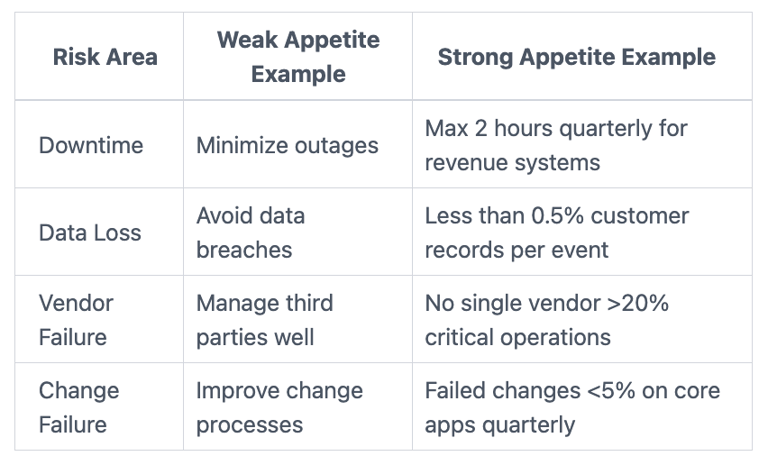
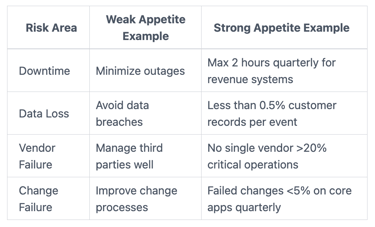
Weak versions invite debate. Strong ones enable tracking.
You've seen busy reports say little. Consequences hit: regulatory scrutiny, M&A delays, revenue dips.
Fix starts with your questions. Demand numbers. Tie to strategy. Avoid these traps for confident oversight.
Your Step-by-Step Path to a Working Technology Risk Appetite Statement
You build appetite that works. Start simple. Link to goals. Name risks. Set lines. Assign metrics.
This path fits audit committees. It stresses measurability. Examples ground it in reality.
Use this framework for categories and levels:
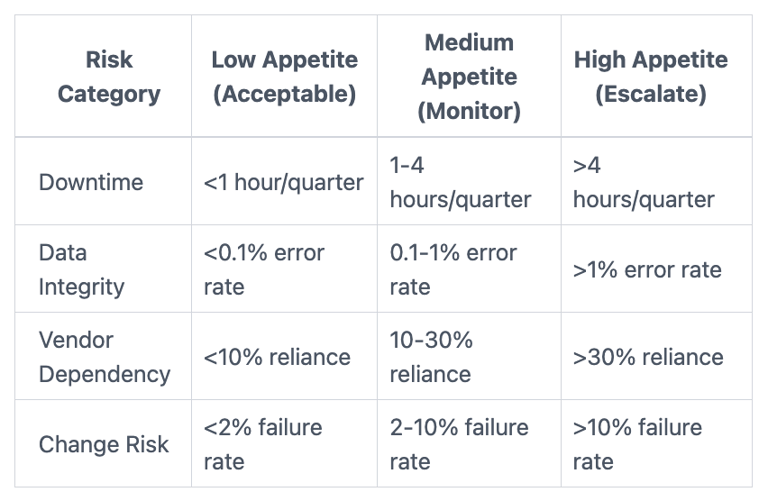
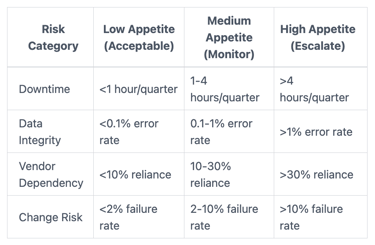
Tailor to your business. Test quarterly.
Step 1: Ground It in Your Business Goals
You map risks to priorities. Ask: Which goals break on failure?
Revenue needs uptime. Customers demand data accuracy. Regs require controls.
Example: Growth targets limit outages to 1% sales loss. This grounds appetite in strategy.
Step 2: Name Your Top Technology Risks Clearly
You pick four to five hits. Cyber breaches top. System failures next. Vendor slips follow. AI bias or change errors round out.
Avoid lists. Focus on business pain. For cyber risk questions audit committees should ask, start here.
Step 3: Draw Lines with Numbers and Triggers
You make concrete. "Max two-hour outage quarterly triggers review."
Distinguish appetite (strategic bound) from tolerance (operational). Numbers enable oversight.
In M&A due diligence, mismatched lines flag issues. Board reviews follow breaches.
Step 4: Build Reporting and Review Cadence
You define dashboards. Trends over trivia. Escalate drifts.
Quarterly refresh. Annual tie to strategy. For clear escalation, see board cyber risk advisor services.
Audit gets summaries. Full board sees material shifts.
Sharp Questions Your Audit Committee Should Ask Today
You pressure-test management now. Use these in meetings.
What downtime hurts customers most? How do vendors align to our lines?
Which goals need strict data rules? What's changed since last review?
How does this fit M&A due diligence? Who owns drifts?
What triggers board pull-in? Show trends against bounds.
You gain evidence fast. Decisions sharpen. For more, check board cybersecurity advisor guidance.
Key Takeaways for Audit Committees on Tech Risk Appetite
Define appetite before crises strike.
Tie thresholds to revenue and trust.
Use numbers over words for clarity.
Review quarterly to catch drifts.
Link to M&A due diligence checks.
Assign owners with escalation paths.
Favor trends in simple dashboards.
Quick FAQs on Technology Risk Appetite
Appetite vs. tolerance? Appetite sets board bounds. Tolerance guides daily ops.
Review frequency? Quarterly minimum. Annual refresh with strategy shifts.
Role in M&A due diligence? Reveals target gaps. Ensures alignment pre-close.
Measure success? Track breaches of lines. Fewer escalations signal strength.
You hold the tools for clear tech oversight.
Schedule 30 minutes to draft using these steps. Ask management one question this week: "What's our max downtime per service?"
Your appetite reduces surprises. It strengthens growth and resilience. Lead with this clarity. For board-level support, explore how boards set technology risk appetite.
Tyson Martin is the executive public and pre-IPO companies in financial services, AI/data, SaaS, and cloud hire to make trust a measurable asset, one accountable answer to Is it secure? Is it resilient? Is the AI governed?
© 2026. All rights reserved.
Navigation
Free Resources
Contact


Stay ahead of your next board agenda
Sign up for Reports & Learnings From the Boardroom. Plain-English AI and cyber governance insights, biweekly. No pitch.
No spam. Unsubscribe anytime. · Or download the Director's AI Question Pack — 25 questions free