
Improve Cyber Risk Oversight Without Board Overreach
Improve cyber risk oversight without overstepping, you set risk appetite, use clear metrics, and hold management accountable at the board level.


You sit in a board meeting. The CISO presents firewall logs and patch counts. Questions turn to specific configs. Time slips away. Strategy gets lost. This happens too often. Boards mean well, but they slide into operations.
You improve cyber risk oversight by sticking to governance basics. Set clear risk appetite. Demand high-level metrics. Ask strategic questions. Enforce management accountability. This keeps you focused on business impact, not daily tech tasks.
Cyber threats grow in April 2026. Ransomware hits operations. AI risks rise. Vendor breaches spread. Yet boards risk distraction. Operator mode pulls you from growth, resilience, and trust. Strong oversight means fewer surprises. You make defensible calls. Management executes.
You start here. These steps build visibility without overload.
Key Takeaways
You define risk appetite first, so decisions align with business goals.
You use simple metrics like exposure scores, not raw logs.
You build quarterly reports with trends and escalations.
You ask questions that reveal gaps, without tech details.
You hold owners accountable through clear action status.
You test readiness with board-level scenarios.
You stay strategic, so oversight strengthens governance.
Spot the Line Between Oversight and Getting Hands-On
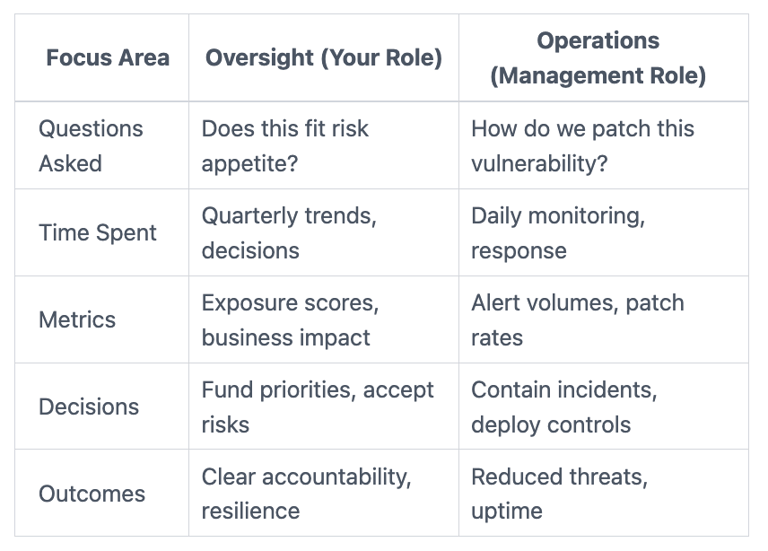
You oversee cyber risk. That means guidance and accountability. Not tool tweaks or incident chases. Oversight asks if risks fit appetite. If management acts. If trends improve.
Operations fix configs. Hunt threats. Run scans. Boards cross the line when they debate those. Business suffers. You miss market shifts. Management loses trust.
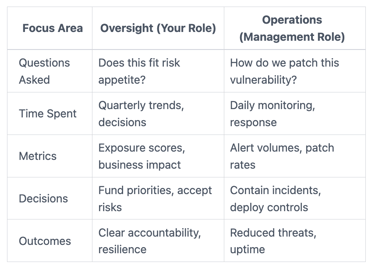
Consider this table. It contrasts roles clearly.
Cross the line, and strategy fades. You chase fires. Growth stalls. For deeper governance, see a board cyber risk advisor.
Signs Your Board Is Slipping Into Operator Territory
You spot slips fast. Debates hit firewall rules. You review raw logs. Time goes to incident playbooks, line by line.
One firm lost a week on email filters. Board grilled details. Strategy talk vanished. Another board fixed vendor tools mid-meeting. Management tuned out.
This erodes trust. Leaders feel micromanaged. You waste time on fixes, not direction. Pull back. Focus on impact. Strong practices restore balance.
Why Boards Fall Into This Trap
Poor reports push details. Fear after breaches drives it. Vendors pitch tools. Roles blur without appetite statements.
Growth adds strain. Visibility lags. Quick fix: Demand business terms. Set escalation rules. You regain control fast.
Set a Clear Risk Appetite to Guide Decisions
You guide with appetite. It states risks you accept for goals. No more vague "low risk." Clear lines prevent meddling.
Follow three steps. First, align with strategy. Name crown jewels: revenue systems, customer data. Ask what downtime costs money or trust.
Second, quantify tolerances. Set hours for outages. Dollars for fraud. Document on one page. Third, approve simply. Board owns it. Management executes.
NIST helps frame, but keep plain. "Portal down over 4 hours? Not ok." This stops ops dives. You decide tradeoffs.
Link to strategy keeps it real. Growth needs speed. Appetite balances it. For board steps, check how boards set technology risk appetite.
Appetite evolves. Review yearly. Ties to resilience.
Make It Measurable Without the Details
You measure with scores. Risk exposure: high, medium, low. Breach costs: under $1M ok? Tie to business.
Dashboard shows: Crown jewel coverage. Downtime trends. No configs needed. Example: "80% critical systems backed up, tested quarterly."
Focus impact. "This gap risks 24-hour outage." You steer without specs. Simple wins.
Build Reporting That Empowers, Not Overwhelms
You need reports that inform. Not spreadsheets. Quarterly dashboards show trends. Risks over appetite. Incident summaries.
Contrast: Busy sheets bury signals. Visuals highlight drifts. Tips: Limit to one page. Escalate breaches only. Frequency fits size: Monthly signals, quarterly deep.
This frees you. Management owns details. You spot issues early. For program reporting, see board reporting for cybersecurity program.
Rules matter. Threshold breach? Notify chair. Progress lags? Explain why. Builds trust.
Key Metrics Every Board Needs
You track five essentials.
Cyber risk score: Overall exposure trend.
Third-party risks: Critical vendors covered.
Resilience readiness: Restore tests passed.
Incident trends: Time to contain.
Control gaps: Open high-impact items.
Each ties to appetite. Why? Shows if business stays safe. No deep math. Trends guide you.
How to Enforce Accountability Through Reports
You hold them via reports. Assign owners per risk. Track action status. Progress to goals.
Missed date? Escalate. Board asks why. Documents decisions. Strengthens oversight.
Ask Questions That Drive Real Accountability
You drive with questions. Strategic ones reveal truth. No ops needed.
Group them. Appetite: "Which risks exceed tolerance?" Gaps: "What stops progress?" Response: "Who decides shutdowns?"
Six key:
Appetite aligned to strategy?
Top gaps and owners?
Metrics show improvement?
Escalation triggers clear?
Incident roles tested?
Vendor risks mitigated?
Exceptions approved?
Next decisions needed?
These uncover issues. Conversational tone works. "Show business hit." For more, try cyber risk questions audit committee should ask.
Push evidence. Builds confidence.
Questions to Test Your Current Setup
You test fast with four.
"What risks exceed appetite now?"
Leads to priorities.
"Owners for top three?"
Names accountability.
"Recent incident: What changed?"
Proves learning.
"Quarterly metrics: In bounds?"
Flags drifts.
Tie to choices. You decide next.
FAQs: Straight Answers on Board Cyber Oversight
How often review cyber reports? Quarterly deep dives. Monthly signals. Matches pace. Keeps fresh without overload.
Management pushes back on metrics? Insist on business ties. Show examples. Start small. Builds buy-in.
No clear risk appetite yet? Workshop one page. Align jewels, thresholds. Test in tabletop. Done in weeks.
Incident hits: Board role? Approve big calls. Demand updates. Not run response. See board incident response oversight.
Advisor needed? Yes, for gaps. Independent view sharpens. Like a cybersecurity governance advisor for boards.
You Lead Stronger Oversight Now
You improve cyber risk oversight with appetite, reports, questions. Stay strategic. Avoid ops.
Business wins. Fewer surprises. Clear trust.
Next: Schedule 30 minutes. Review appetite. Pick three questions for meeting. Act now. You decide with confidence.
Tyson Martin is the executive public and pre-IPO companies in financial services, AI/data, SaaS, and cloud hire to make trust a measurable asset, one accountable answer to Is it secure? Is it resilient? Is the AI governed?
© 2026. All rights reserved.
Navigation
Free Resources
Contact


Stay ahead of your next board agenda
Sign up for Reports & Learnings From the Boardroom. Plain-English AI and cyber governance insights, biweekly. No pitch.
No spam. Unsubscribe anytime. · Or download the Director's AI Question Pack — 25 questions free