
Why Cyber Risk Oversight Still Feels Weak, Even With Regular Board Updates
Your cyber risk oversight still feels weak when board updates show metrics, not exposure, ownership, or business impact. Learn what to fix now.


You sit in the boardroom. Your CISO presents slick slides on metrics and compliance. Patch rates hit 99%. No major incidents last quarter. Yet you leave uneasy. Real exposure lingers unspoken.
Cyber risk oversight feels weak because updates focus on past snapshots. They ignore business ties and real threat tests. You get data, not decisions. This leaves surprises that hit growth, erode trust, and slash value. Boards face AI speed, vendor sprawl, and 2026 rules. Weak oversight slows choices and draws regulators.
Common gaps include history over forecasts, data overload without priorities, and tech talk without revenue links. You need reports that match appetite, predict issues, and assign clear roles.
Key Takeaways
You align cyber risk oversight with business appetite for faster calls.
You demand predictive views over backward metrics to spot threats early.
You cut data noise by focusing on 3-5 key indicators tied to outcomes.
You bridge cyber details to revenue, trust, and operations for real decisions.
You build escalation rules that prevent surprises and assign owners.
You test scenarios quarterly to prove readiness under pressure.
You ask sharp questions to turn updates into board actions.
Next, you see why this weakness alarms leaders today.
Key Takeaways Up Front
You spot why metrics alone fail cyber risk oversight. Busy dashboards hide priorities.
You demand reports tied to appetite. Thresholds trigger escalations before impact grows.
You shift to forward scenarios. Stress tests reveal gaps in AI or vendor risks.
You clarify ownership. Defined roles cut confusion during incidents.
You focus on business links. Updates show downtime costs or trust hits clearly.
You build steady cadences. Quarterly drills and trends build confidence.
You use questions to drive change. They expose flaws fast for stronger talks.
Why Weak Cyber Risk Oversight Raises Alarms for Leaders Now
You face AI tools that outpace controls. Vendor numbers swell with growth. Regulators demand proof in 2026. These pressures strain old models.
Weak oversight blindsides you. Incidents erode board trust. Decisions stall as facts scramble. Regulators probe deeper. Valuations drop on disclosure fears.
You feel it when growth adds systems weekly. One weak link halts revenue. Trust fades with customer data slips.
Consider a retailer. Updates showed green metrics. A vendor breach stopped sales for days. Board learned late. Stock fell 15%. Recovery cost millions.
Good updates no longer suffice. You need oversight that matches speed. It ties cyber to resilience and governance. This builds trust amid strains.
The Hidden Flaws in Your Regular Cyber Risk Updates
Updates seem solid. Yet they leave you exposed. Three flaws persist. They block true cyber risk oversight.
Stuck Reporting History Instead of Predicting Threats
You get past metrics. Incidents dodged. Scores high. But threats evolve. AI exploits or supply chains shift fast.
Reports skip forecasts. No scenarios link to business moves. You miss pivots attackers take.
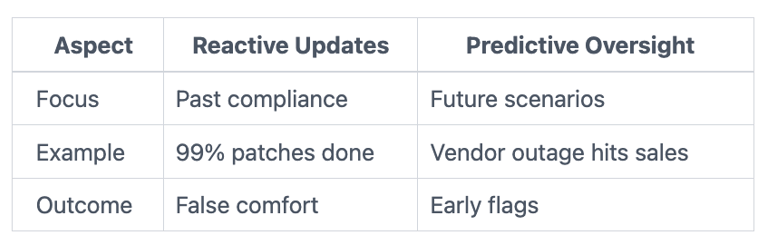
Predictive views tie risks to plans. For more on board cyber risk advisor roles, see how they clarify appetite.
Metrics That Drown You in Data Without Clear Insights
Dashboards overwhelm. Scores everywhere. No priorities stand out.
You scan for action. Time limits this. KPIs lack context. False comfort grows.
Focus on 3-5 indicators. Link them to appetite. Board time stays sharp.
This fits constraints. You spot what demands focus first.
No Bridge Between Tech Talk and Business Impact
Updates use jargon. Controls listed. No revenue ties.
You hear of gaps. But customer trust? Delays? Unclear.
Ownership blurs. Escalations lack paths. Decisions wait.
Translate to impacts. Define who acts when.
Signs of Strong Cyber Risk Oversight You Can Build Today
Strong oversight feels proactive. You gain control. Demand these shifts.
Reports Aligned to Your True Risk Appetite
Appetite sets bounds. Updates mirror it. Thresholds flag breaches.
Example: Downtime costs $1M daily. Reports alert at 10% risk.
You approve or act fast. For details on how boards set technology risk appetite, check proven steps.
Forward Views with Stress-Tested Scenarios
Scenarios top threats. Quarterly simulations test them.
Track trends like AI risks. Confidence builds as gaps close.
You prepare for real hits. See board incident response oversight for drill guides.
Crystal-Clear Ownership and Escalation Rules
Roles defined. Cadences set. Board drills confirm.
Fewer surprises follow. Ownership sticks in stress.
Questions to Strengthen Your Next Oversight Discussion
Use these six. They cut flaws. Drive decisions.
How does this quarter's risk profile match our appetite? This tests alignment. Forces tradeoffs clear.
What top threats could hit revenue next? Show scenarios. Reveals forward focus over history.
Which 3-5 metrics best track exposure? Why these? Prioritizes amid data flood.
What business impacts from key gaps? Revenue? Trust? Builds the missing bridge.
Who owns top risks? Escalation triggers? Clarifies roles fast.
What changed since last update? What needs board call? Shows trends and actions.
Ask them next meeting. Brief explanations follow each. Impact shows immediate.
For more, explore cyber risk questions audit committee should ask.
FAQs on Fixing Weak Cyber Risk Oversight
How often should boards review cyber risks? Quarterly deep dives work best. Monthly dashboards track trends. Tie to business changes. This keeps oversight steady without overload.
What's the fastest way to improve reporting? Start with one-page formats. Link to appetite. Cut to 3-5 metrics. Test in next meeting. See quick wins. Details in board reporting for cybersecurity program.
How do you align updates to risk appetite? Define thresholds first. Money, downtime, trust. Reports flag breaches. Workshop drafts it fast.
What scenarios matter most now? Vendor outages, AI misuse, ransomware. Stress-test quarterly. Builds real readiness.
How to handle data overload? Demand priorities. Trends over counts. Board time stays focused.
Strong Oversight Starts With Targeted Changes
Weak updates signal gaps. You fix them with appetite ties, forward views, and clear rules.
Schedule a risk appetite review this month. Test one scenario next quarter. Ask two questions in updates.
You shift from unease to control. Oversight matches pressures. Lead with confidence.
Tyson Martin is the executive public and pre-IPO companies in financial services, AI/data, SaaS, and cloud hire to make trust a measurable asset, one accountable answer to Is it secure? Is it resilient? Is the AI governed?
© 2026. All rights reserved.
Navigation
Free Resources
Contact


Stay ahead of your next board agenda
Sign up for Reports & Learnings From the Boardroom. Plain-English AI and cyber governance insights, biweekly. No pitch.
No spam. Unsubscribe anytime. · Or download the Director's AI Question Pack — 25 questions free