
How Enterprise Buyers Actually Evaluate Your Trust: Inside the Security Review That Decides Your Deal
Prepare evidence, align security and legal, and show enterprise buyers you can protect data, manage risk, and recover.
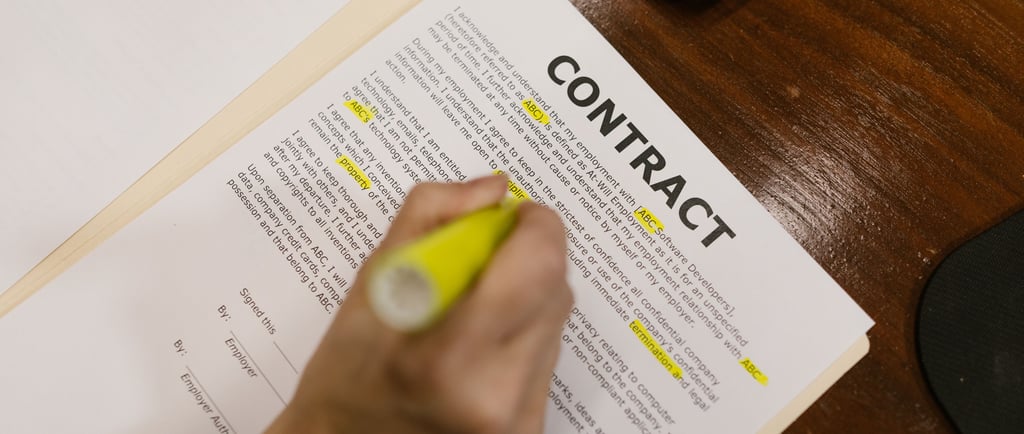
Understanding how buyers evaluate your trust in a security review is essential when an enterprise prospect asks for your security documentation, as the deal suddenly gains more complex moving parts. Procurement teams demand clear processes, security teams require tangible proof, and legal departments insist that contract terms match your current reality. Meanwhile, your executive sponsor needs to know if a weak answer will delay the sale.
This is not a simple question about your tech stack. It is a fundamental question of trust. Buyers want to know whether you truly understand your risks, protect their sensitive data, maintain control over your own suppliers, and possess the capability to act decisively when something fails.
TLDR: What Buyers Need to See
Building trust with B2B buyers requires demonstrating consistent operating discipline rather than just relying on static policies or certifications.
Your security posture is validated through real-world execution, focusing on the buyer's data, critical services, key suppliers, and the stakeholders who own security decisions.
Create transparent trust assets that document your security maturity. An acknowledged gap that includes a clear owner, compensating safeguards, and a remediation date is far more credible than an attempt to project false certainty.
Ensure that your security, sales, legal, and leadership teams are aligned on a single, consistent account of your security posture.
Proactively assemble your trust assets before the deal reaches the procurement stage, rather than scrambling for answers after the buyer sends a 300-question security review form.
What Enterprise Security Reviews Really Measure
An enterprise security review acts as a critical stage of due diligence for your buyer. It is their way of testing whether your company can securely handle their sensitive information and provide reliable service after the contract is signed.
It is not a simple compliance checklist. It is not just a completed questionnaire or a SOC 2 report uploaded to a portal.
While a SOC 2 report may help, alongside penetration test summaries, privacy documentation, and a current incident response plan, buyers are primarily testing four practical questions:
Can you protect our data?
Can you control access and suppliers?
Can you detect, contain, and recover from failure?
Can you prove your claims?
That is why a review often includes questionnaires, evidence requests, contract negotiations, interviews, privacy terms, business continuity materials, and security testing summaries. Security findings matter because they directly impact revenue, operations, customer trust, and legal exposure. Treating cybersecurity as a business risk management issue gives you a stronger answer than treating it as a technical IT task.
Buyers commonly request:
Security policies and recent review dates
SOC 2, ISO 27001, or other independent assessments
Incident response and business continuity evidence
Access-control, encryption, and vulnerability-management evidence
Vendor risk records and privacy documentation
Why a polished questionnaire is not enough
A "yes" answer does not settle the matter. Buyers look for transparency, requiring proof that a control exists, applies to the stated scope, and is tested in real operations.
"We have a policy" is weak. "Our access policy covers production systems, was reviewed in May, and is supported by quarterly access reviews" demonstrates the level of credibility buyers demand.
They also compare your questionnaire answers with your contracts, policies, and interview responses. If those materials conflict, the buyer faces a bigger problem than one missing control; they cannot determine which version of your company is true.
The people behind the review
Security teams test control strength and technical exposure. Procurement teams test process, cost, and contract risk. Legal and privacy teams focus on data use, liability, breach duties, and regulatory exposure. Each member of the buying committee has unique buyer motivations that drive the specific questions they ask.
Your business sponsor asks a simpler question: could this supplier disrupt our operations or damage our reputation? Executives want confidence that the risk is known, owned, and governed.
You need one clear story. It should answer each group's concerns without creating five versions of the truth.
How Buyers Evaluate Your Trust Across Five Signals
Buyers rarely judge trust on one document. They form a view from the evidence, the people in the room, and the quality of your answers.
Five signals shape that view:
Clear ownership: People can make decisions and escalate risk.
Control effectiveness: You can show that important controls work.
Recovery strength: You can contain disruption and restore services.
Third-party discipline: You know which suppliers affect customer risk.
Honest communication: You describe limits without hiding behind vague language.
Keep a compact evidence index. Map each major claim to a document, control owner, review date, and known limitation. Busy security activity does not prove lower exposure. A long list of tools can still hide weak identity controls, untested backups, or unmanaged vendors.
Ownership shows whether decisions can happen
Buyers want names, not committee labels. Who owns security, privacy, incident response, access decisions, risk acceptance, and customer communication? Your Subject Matter Experts should be identified clearly to provide authoritative answers during the evaluation.
Ask yourself:
Who approves a security exception?
Who can stop a risky release?
Who informs the customer after a serious incident?
Who reports unresolved risk to executive leadership?
Strong answers name a responsible executive, define authority, and show the escalation path. Clear decision rights for technology risk prevent delays when the facts are incomplete and the stakes are high.
Evidence tells buyers whether controls work
The most useful evidence is current and specific. Providing high levels of specificity ensures that buyers understand exactly how your security posture aligns with their requirements. Buyers often value access reviews, multi-factor authentication coverage, vulnerability-remediation trends, incident exercises, restore tests, logging coverage, vendor reviews, training results, and independent assessments.
They do not expect perfection. They expect scope, dates, trends, and proof that gaps have an owner.
A small evidence set with context is more credible than a large folder of undated policies. If multi-factor authentication covers 95 percent of in-scope users, say what is excluded, why it is excluded, and when the gap will close. By curating Original Information rather than generic templates, you demonstrate that your security program is tailored to your unique environment.
Recovery reveals what happens after failure
Prevention matters. Recovery tells the buyer whether your company can operate through a bad day. Including clear Implementation Details regarding your recovery processes proves that your theoretical plans actually function in a real-world scenario.
Buyers may ask what would stop operations, how quickly critical services can return, what data could be lost, and what customers would be told. Your answers should cover business impact analysis, recovery time and recovery point targets, protected backups, restore testing, incident roles, tabletop exercises, and post-incident improvement.
A plan in a folder is not enough. You need Proof and Evidence that people have practiced their roles. Board incident response oversight starts with the same question a buyer will ask: who decides, who gets notified, and when?
Vendor and AI risk can change the answer
Your trust profile includes your cloud providers, subcontractors, contractors, and AI tools. If they can access customer data or interrupt delivery, the buyer will care.
Be ready to explain data access, subprocessors, deletion terms, breach notification, audit rights, exit support, and service continuity. Vague vendor promises are weaker than contract terms, review records, technical limits, and compensating controls.
AI adds another question: does customer data enter an AI system, and can it be retained or used beyond the intended service? Directors who need sharper questions can Download the AI Boardroom Question Pack. Your third-party risk reporting should show which suppliers could affect data, uptime, or customer trust.
Why Deals Get Stuck, and How to Fix the Trust Gaps
Deals often stall because the buyer cannot see whether you manage exposure with discipline. The problem may not be one severe finding. It may be incomplete answers, old policies, conflicting claims, unnamed owners, unexplained exceptions, or an incident commitment that nobody has tested.
Refining your discovery process is essential to maintaining momentum. Avoid the trap of product pushing during these sensitive technical discussions, as buyers are looking for security maturity rather than a sales pitch. Instead, lead with a formal evaluation plan that aligns your security posture with their specific requirements.
Run a pre-review readiness process before sales sends the first answer:
Identify likely deal blockers based on the buyer, data type, and service scope.
Gather current evidence and resolve conflicting claims.
Assign an executive owner to every open issue.
Use a defensible decisions checklist to record the tradeoff, owner, follow-up date, and reason for accepted risk.
Turn every difficult answer into a risk decision
Do not hide an incomplete control. State the gap, explain the business impact, describe the temporary safeguard, and give the funded plan with an owner and date.
For example, you may have delayed patching on a legacy system. Explain the affected scope, access limits, monitoring, and replacement date. When addressing continuity and legal documentation, be clear about your escrow arrangements. If relevant to your service, specify who serves as your successor trustee to ensure that your business commitments remain intact regardless of future organizational changes. If restore testing is incomplete, identify the critical services, the last successful test, and the scheduled exercise.
Honest limits build more trust than broad claims that fail under review.
Build a buyer-ready trust room
Organize your evidence around governance, identity and access, data protection, application and infrastructure security, incident response, recovery, third-party risk, privacy, and compliance.
Add an index with version dates, scope notes, owners, and access limits. Remove sensitive details where needed, but retain enough evidence to show the control exists and is tested.
The goal is fast, consistent answers. It is not a document dump.
A 30-Day Plan to Pass More Enterprise Security Reviews
You do not need an extensive maturity program before your next assessment. You need a clear picture and a short list of buyer-centric actions that reduce concern and move the deal forward.
In week one, map the buyer journey, likely data flows, critical services, and review owners. In week two, find outdated evidence and conflicting claims. In week three, close high-impact gaps or document accepted risk with executive approval. In week four, run a mock review with security, legal, privacy, sales, procurement, and an executive sponsor.
During this evaluation phase, track five measures:
Unanswered buyer questions
Evidence age
Open high-risk findings
Time required to produce evidence
Unresolved ownership gaps
If leadership lacks visibility into those measures, See Where Your Board Actually Stands. Issues that cannot close during the review need a credible 90-day roadmap.
Know what to fix first
Prioritize the controls that protect sensitive buyer data, support critical operations, reduce likely attack paths, and prove recovery capability. Use diagnostic questions early on to uncover specific buyer concerns before they become blockers.
Identity protection, privileged access, secure software practices, tested backups, incident readiness, and supplier controls often matter more than another low-value certification. Furthermore, demonstrate your financial stability to ensure the buyer perceives your service as having a high fair market value, which signals long-term reliability. Separate a true deal blocker from an improvement that can sit on a documented roadmap.
Use one honest narrative
Sales should not promise controls that security cannot verify. Legal should not accept breach terms that operations cannot meet. Leadership should approve the remaining tradeoffs with full context.
Before submission, ask three questions: Can your security lead explain every major answer? Can legal support the contract position? Can the executive sponsor approve the risk that remains?
Enterprise Trust Review FAQs
What do enterprise buyers look for in a security review?
They look for evidence that you protect data, control access, manage suppliers, recover from disruption, and communicate honestly about gaps. Beyond standard checklists, your ability to share clear, original information acts as a major differentiator during the evaluation process.
Is a SOC 2 report enough?
No. A SOC 2 report can support your answer, but buyers may still require privacy terms, testing evidence, incident commitments, and details about their specific data. Providing context through thoughtful documentation helps in building trust with skeptical stakeholders.
How long does a security review take?
Timing depends on data sensitivity, service criticality, contract terms, buyer maturity, and the quality of your evidence. Missing answers and conflicting claims create the longest delays.
What should you do with an open security finding?
State the scope, business impact, safeguard, owner, and target date. Do not describe a known limitation as a closed control. Use this opportunity for thought leadership by demonstrating transparency and a proactive roadmap for remediation.
Which documents should you prepare first?
Start with current policies, independent assessments, access and recovery evidence, incident materials, vendor records, privacy documents, and a clear evidence index.
Who should own the response?
Security should coordinate technical evidence. Legal, privacy, procurement, sales, and an executive sponsor must own their parts of the answer to ensure consistency across the organization.
Related Reading
Deepen your understanding of corporate credibility and transparency with these additional resources:
Questions every director should ask the CISO regarding security transparency.
What your board packet is missing to build institutional credibility.
AI governance questions management must answer to ensure long-term transparency and trust.
Trust Is a Business Decision
Enterprise buyers are not asking for a flawless security program. They are looking for proof that you understand risk, control what matters, recover when needed, manage suppliers, and tell the truth about gaps. Ultimately, winning enterprise deals is about proving that your organization is reliable, consistent, and prepared.
This level of confidence is earned through professional Sales Behaviors that prioritize transparency and the strategic use of Trust Assets to provide verifiable evidence during the procurement process. Better trust reviews come from better ownership, better evidence, and better decisions. If you need a clearer view of cyber risk, deal readiness, or executive accountability, Get Board-Ready on AI and Cyber Risk.
Tyson Martin is the executive public and pre-IPO companies in financial services, AI/data, SaaS, and cloud hire to make trust a measurable asset, one accountable answer to Is it secure? Is it resilient? Is the AI governed?
© 2026. All rights reserved.
Navigation
Free Resources
Contact
Stay ahead of your next board agenda
Sign up for Reports & Learnings From the Boardroom. Plain-English AI and cyber governance insights, biweekly. No pitch.
No spam. Unsubscribe anytime. · Or download the Director's AI Question Pack — 25 questions free