
That's a real problem when summaries are written by security teams for security teams.
Only three in 10 directors rate their board's ability to oversee a cyber crisis highly, according to NACD and WSJ Pro research — and that gap widens when the reporting they receive is dense with technical language they can't act on. This post walks through exactly how to build an executive summary that earns trust, drives decisions, and communicates clearly to non-technical leaders without losing the substance that makes it credible.
Key Takeaways
- An IT security risk assessment executive summary is a 1–3 page, non-technical distillation of your full findings, written for decision-makers — not auditors
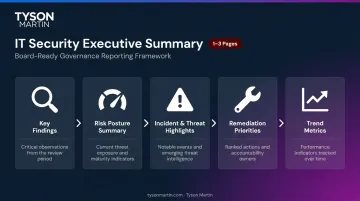
- Five sections make up the structure: key findings, risk posture, threat and incident highlights, remediation priorities, and trend metrics
- Surface the 3–5 risks that most demand executive attention — not every item from the full report
- The differentiator between weak and strong summaries is audience focus: write for the decision-maker, not the verifier
- Format, risk framing, and trend data carry equal weight to content in board-level summaries
What Makes an Executive Summary Different from the Full Report
The full IT security risk assessment is a detailed technical document. Per NIST SP 800-30, a complete assessment covers threat identification, vulnerability analysis, likelihood and impact scoring, and risk prioritization across the organization's assets and operations. It can run dozens of pages. It's meant to be comprehensive.
The executive summary serves a different purpose: a 1–3 page communication artifact written for people whose job is to govern, not to audit.
Board members and audit committee directors don't need to understand the technical findings in detail. Their job is to ask the right oversight questions, allocate resources, and make decisions about risk tolerance. A summary written for a security analyst will fail a board audience entirely.
An effective executive summary answers exactly three questions:
- What is our current risk exposure?
- What changed since last time?
- What decisions or investments does leadership need to make?
Everything else belongs in the full report or operational briefings. If your summary is trying to answer more than these three, it's doing the security team's job — not the board's.
What You Need Before You Write
The executive summary can't be written before the full risk assessment is complete. You need the full findings as your raw material. That means:
- Complete risk register with current severity ratings and remediation status
- Incident records from the reporting period, including response actions and resolution
- Significant changes since the last cycle — new systems, acquisitions, scope changes, regulatory updates
- Prior period metrics so you can show trend, not just snapshot
Documents give you the data. Stakeholder input gives you the context that turns raw findings into a coherent story. Before the first draft, get alignment from:
- CISO or security lead — technical findings and what they mean in practice
- Business unit owners — operational impact and dependencies
- Legal and compliance — regulatory exposure and any disclosure considerations
- Incident response team — documented events and what was learned from them
The final prerequisite is knowing your audience before you start. A summary for an audit committee lands differently than one for a full board.
Audit committees want control effectiveness, traceability, and compliance linkage. The full board wants business impact scenarios, strategic risk framing, and clear decision asks. The structure can stay consistent, but the framing needs to shift.
How to Write an IT Security Risk Assessment Executive Summary
Step 1: Synthesize Findings Into Business-Relevant Risk Themes
Review the complete assessment and group findings by business impact, not technical category. NIST's three-tier hierarchy is useful here — Tier 1 (organization-level) and Tier 2 (mission/business process) risks are what belong in an executive summary. Tier 3 system-level findings stay in the technical report.
The translation matters. "Access control gaps in the financial systems environment" is executive-relevant. A list of CVE IDs is not.
Step 2: Select the 3–5 Risks That Require Leadership Visibility
The summary is not a complete inventory. It's a curated escalation of what requires board-level attention, resource decisions, or governance action.
Select risks based on:
- Severity and business impact
- Regulatory or legal exposure
- Whether a decision or investment is needed that only leadership can authorize
- Whether the risk has worsened since the last reporting cycle
Everything else gets handled at the operational level.
Step 3: Translate Every Risk Into Business Language
Replace every technical finding with its business consequence. ISACA guidance on board risk reporting is direct on this: board reporting should use the language of organizational governance, not IT operations.
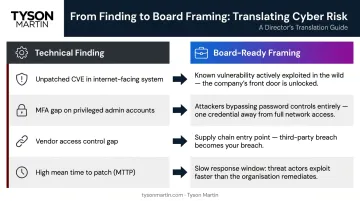
Some practical translations:
| Technical Finding | Board-Ready Framing |
|---|---|
| Unpatched CVE on legacy server | Outdated payment systems could expose customer data and trigger regulatory penalties |
| MFA gap on admin accounts | Unauthorized access to admin credentials could disrupt operations and expose sensitive records |
| Vendor lacks access controls | A compromised supplier could expose customer data and trigger notification requirements |
| High mean time to patch | Critical vulnerabilities are staying open longer than industry benchmarks, increasing exposure window |
If a technical term can't be eliminated, follow it immediately with a one-line plain-English parenthetical.
Step 4: Draft Sections in Logical Order
Follow this sequence for executive readers:
- Key findings (3–5 bullets, headline-level)
- Risk posture summary (overall state, methodology, comparison to prior period)
- Incident and threat highlights (what happened, what's emerging)
- Remediation priorities (what to fix, what it requires from leadership)
- Trend metrics and forward-looking indicators
Keep the full document to 1–3 pages. Use headers, short paragraphs, and visual elements wherever they reduce cognitive load — heat maps, traffic-light indicators, and trend lines all work well here.
Board members may spend fewer than five minutes on this document before a meeting. Design for that reality.
Step 5: End With a Clear Decision Ask
Every executive summary should close with an explicit statement of what leadership is being asked to decide, approve, fund, or escalate. Without that ask, the document reports — but doesn't govern.
A well-framed decision ask names the specific action, the owner, and the consequence of inaction. For example:
"The audit committee is asked to approve a $200K remediation budget for legacy system patching. Without this investment, the organization remains outside the 30-day patch SLA required under our cyber insurance policy."
What to Include in Each Section
Key Findings
Open with 3–5 bullets summarizing the most critical discoveries from the assessment period. These should be:
- Phrased in business exposure terms, not technical findings
- Scannable at a glance — think headline news
- Ordered by significance to the organization, not by technical severity rating
This section sets the agenda. If a board member reads nothing else, these bullets should tell them whether there's a problem that requires their attention today.
Risk Posture Summary
Describe the overall current state. Include:
- What was assessed and what methodology was used
- A high-level risk score or rating using a consistent model across reporting periods — boards need to compare, not recalibrate
- A comparison to the prior cycle (improved, stable, deteriorating)
- Any areas that were out of scope, and why
Consistency here is essential. Changing your scoring model between cycles destroys the board's ability to track progress or ask informed questions.
Incident and Threat Highlights
Summarize significant security incidents from the period — response actions taken, resolution status, and any residual exposure. Then add external threat context relevant to your industry and size.
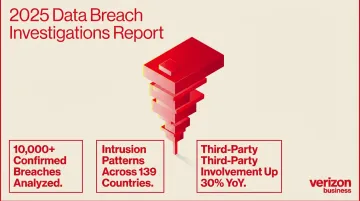
Current threat data provides useful grounding. The Verizon 2025 Data Breach Investigations Report analyzed 12,195 confirmed breaches and found that system intrusion accounted for 53% of breach patterns, with the human element involved in approximately 60% of breaches. Third-party involvement doubled from 15% to 30% in a single year. That context gives boards a principled reason to escalate specific risks — not just a CISO's recommendation.
Remediation Priorities and Recommendations
For each priority, present three data points:
- What the risk is (in business terms)
- What the recommended action is
- What resource or decision is needed from leadership to execute it
Include estimated cost ranges to anchor budget conversations. The goal is a structure boards can actually hold management accountable to: named owners, target dates, and measurable outcomes — not vague commitments.
When structuring remediation recommendations for board audiences, the format that works is a one-page scorecard showing each outcome, the evidence that will confirm closure, and the owner with a due date. Two to three decision options are provided for major items, each with cost, time, operational impact, and residual risk.
That structure gives boards real choices rather than rubber-stamp approval.
Trend Metrics and Forward-Looking Indicators
Include 3–5 stable, recurring metrics that allow the board to track posture over time. NACD's board-level reporting examples recommend quarter-on-quarter trend analysis with consistent definitions. Good candidates include:
- Number of critical open findings (with trend direction)
- Mean time to remediate critical vulnerabilities
- Patch compliance rate on crown-jewel systems
- MFA coverage on admin and privileged accounts
- Percentage of high-risk systems with tested controls
The key word is stable. Changing metrics between reporting cycles makes trend analysis impossible — and boards notice when the goalposts move.
Board Communication Principles: Writing for Decision-Makers
The fundamental difference between writing for a board and writing for a compliance audience comes down to purpose. Compliance audiences need to verify and certify. Boards need to understand, decide, and govern. Every sentence in an executive summary should serve one of those three functions — or it should be cut.
Principles worth applying:
- Translate jargon into business consequences. "Multi-factor authentication gap" becomes "unauthorized access risk to sensitive financial systems" — every time, without exception.
- Anchor risk to what the organization is protecting. Revenue targets, uptime commitments, regulatory standing, customer trust — frame risk against those priorities, not against a control framework.
- Separate risk level from confidence. The board should know when data is thin or stale. False comfort from incomplete information is worse than acknowledged uncertainty.
- Position security as a strategic partner, not a risk blocker. The right question isn't "how exposed are we?" — it's "are we taking the right risks relative to our business strategy?" That shift moves boards from approving spending to owning risk appetite decisions.
Consistency across reporting cycles matters as much as the content itself. When boards see the same structure, the same metrics, and the same risk framing each quarter, they develop the oversight literacy to ask better questions. Changing the format between cycles resets that learning and undermines governance.
Common Mistakes That Weaken Executive Summaries
Writing a compressed version of the full technical report. The most frequent failure. CVE IDs, control family nomenclature, and NIST framework references have no place in an executive summary. Accurate data buried in inaccessible language produces a document no board member can use to make decisions.
Presenting risk as a snapshot without trend context. Without comparison to the prior period, a board can't tell whether risk is improving or deteriorating — and can't hold management accountable for either. That's the "trivia vs. trend" problem. Trend data is what turns a status update into an oversight tool.
Burying the call to action. Ending with findings and recommendations — but no explicit ask — is the most common structural failure. The board should leave knowing exactly what it is being asked to decide, approve, fund, or escalate. A summary without a clear ask is a report, not a governance tool.
Reporting activity instead of exposure. Metrics like "number of alerts blocked" or "tickets closed" look like progress but tell a board nothing about actual risk levels. If a metric doesn't help a director decide whether to ask a harder question or increase the budget, it doesn't belong in the summary.
Frequently Asked Questions
How long should an IT security risk assessment executive summary be?
One to three pages. Long enough to cover key findings, risk posture, incidents, remediation priorities, and trend data — short enough that a board member can read it before a meeting without hours of preparation. If it runs longer, it's a report, not a summary.
What is the difference between an IT security risk assessment and its executive summary?
The full assessment is the detailed technical document covering all assets, threats, vulnerabilities, controls, and risk scoring. The executive summary is a 1–3 page synthesis written for non-technical leaders that surfaces only what they need to make governance decisions. The full report is source material; the summary is a governance artifact.
Who should write the IT security risk assessment executive summary?
Typically the CISO or security lead, reviewed by whoever is presenting it to the board. Organizations without a dedicated CISO often engage a fractional or interim CISO — combining technical accuracy with boardroom clarity is a distinct skill set, and getting both right matters more than most organizations expect.
How often should an executive summary be updated and presented?
Most organizations present at least annually, with many regulated industries requiring quarterly updates. The cadence should match the organization's risk environment and board meeting schedule. Monthly one-page dashboards between deeper quarterly reviews work well for organizations with active governance programs.
What metrics should always appear in the executive summary?
At minimum: current risk posture score or rating, comparison to prior period, number of critical open findings, top remediation priorities with status, and any regulatory compliance exposure. Prioritize stable, repeatable metrics over one-time data points — the board needs to track trends, not decode new numbers each cycle.
How do you explain complex cyber risks to a board in plain language?
Replace every technical term with its business consequence. Unpatched systems are unlocked doors; a vendor with no access controls is an unsecured side entrance. Every risk should land as a dollar amount, an operational disruption, or a regulatory penalty — something leadership can weigh against other business priorities without needing a translation.